BODY
GRAPHIES
Cartographies made with and through the body,
in and of cities.
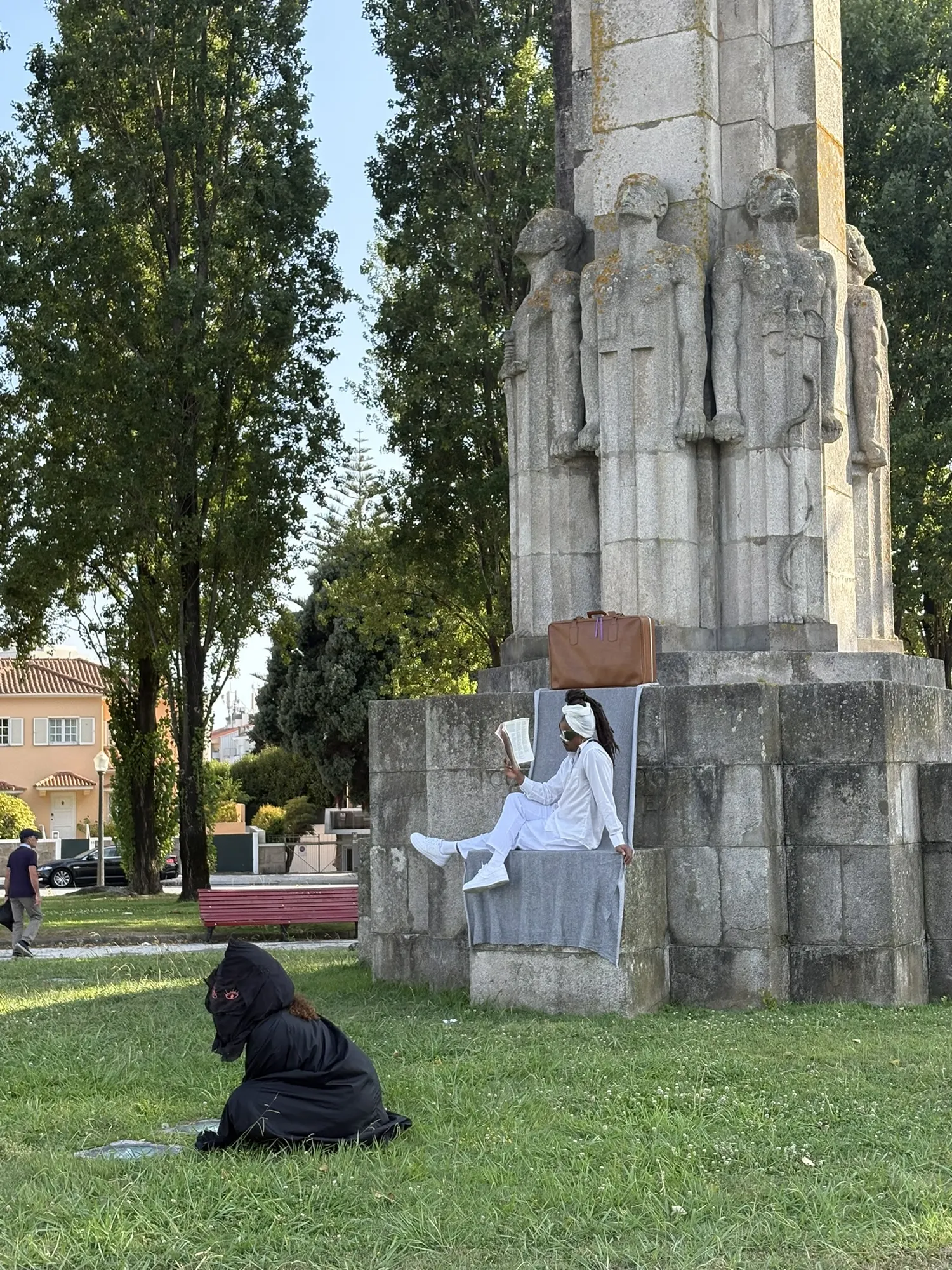
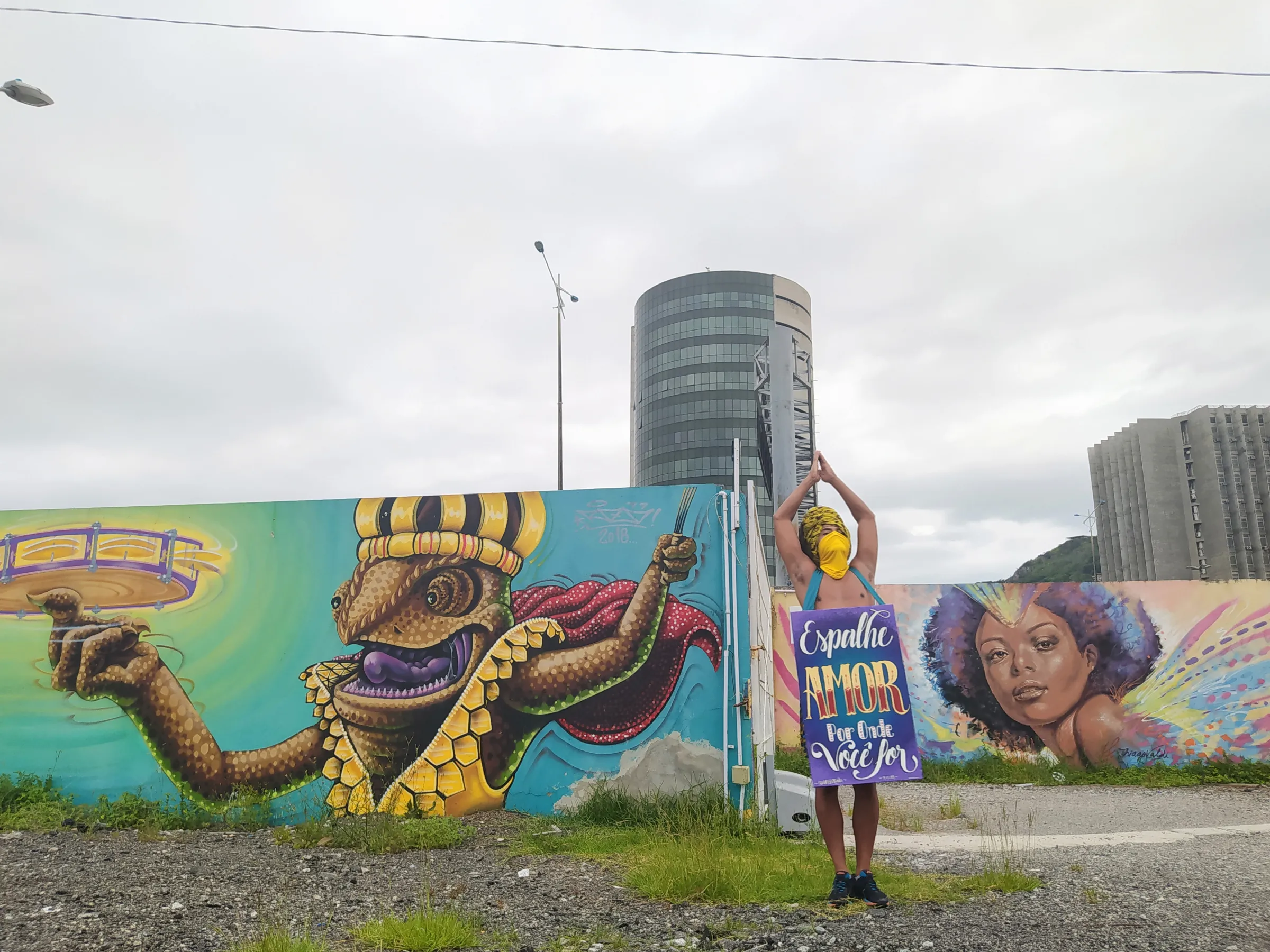
Rafael’s artistic research puts the relationship between body and city under tension, inscribing Blackness as presence, memory and the reinvention of public space. It is a practice that challenges structural racism and the violence and erasures imposed on Black body-territories. It questions the ethnic and racial intersections in the memory of how cities were built, as an artistic, scientific and Afrofuturist practice of anti-racist resistance that seeks to overcome trauma and to disalienate body-territories through the making of bodygraphies.
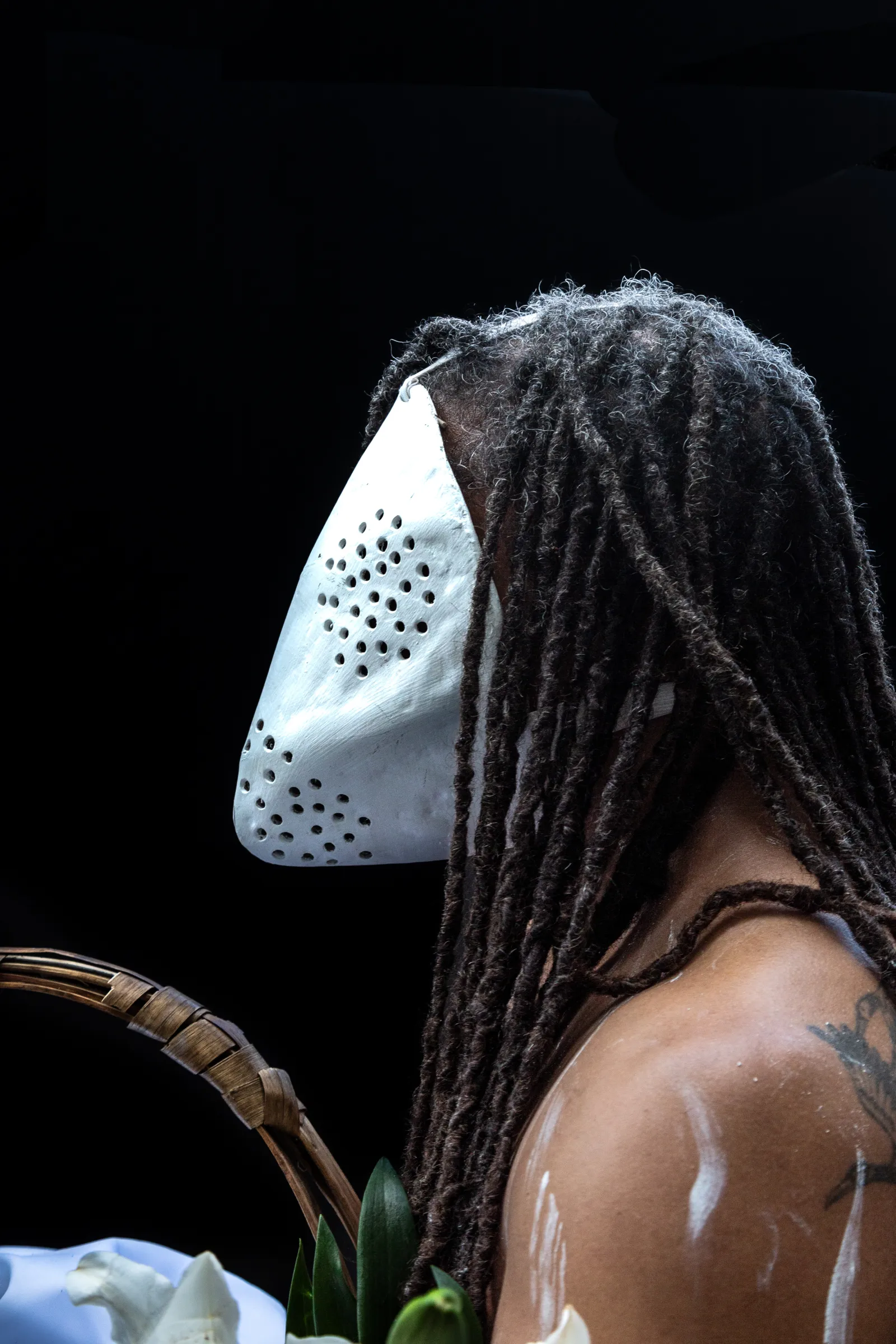
Photo: Thiago Liberdade e Cristina Alves
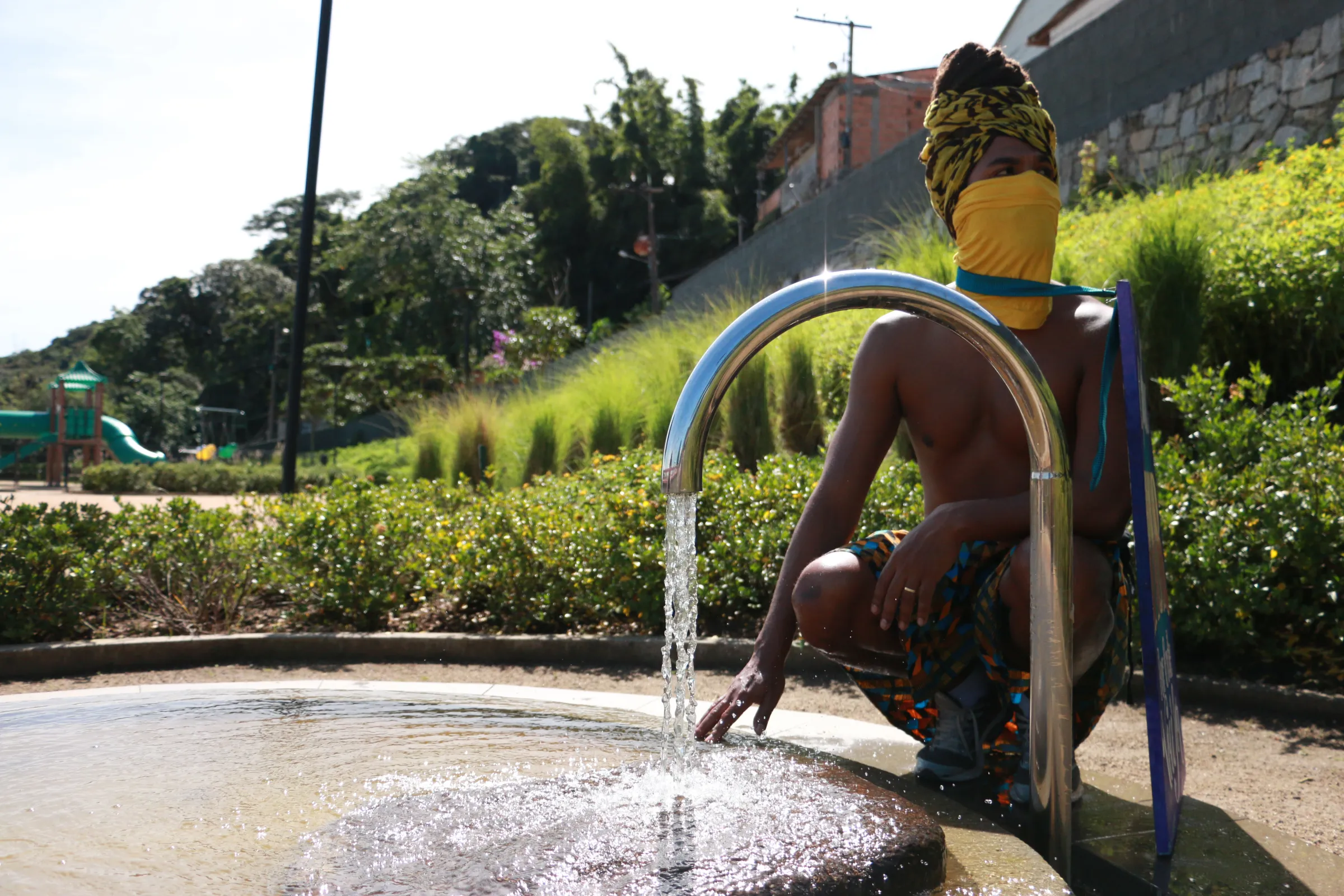
Photo: Priscila dos Anjos e William Thomsen
Bodygraphies are cartographies made with and through the body, in and of cities. They are urban narratives (artistic, literary, cinematic) that question the relationship between body, archive and city.
They are singular ways of experiencing the city through otherness, using subversive tactics that unsettle hegemonic views and expose the colonialities that social amnesia keeps trying to erase.
Rafael calls his performances aparições (Appearances), in dialogue with the work of South African artist Lhola Amira, whose works are named Appearances.
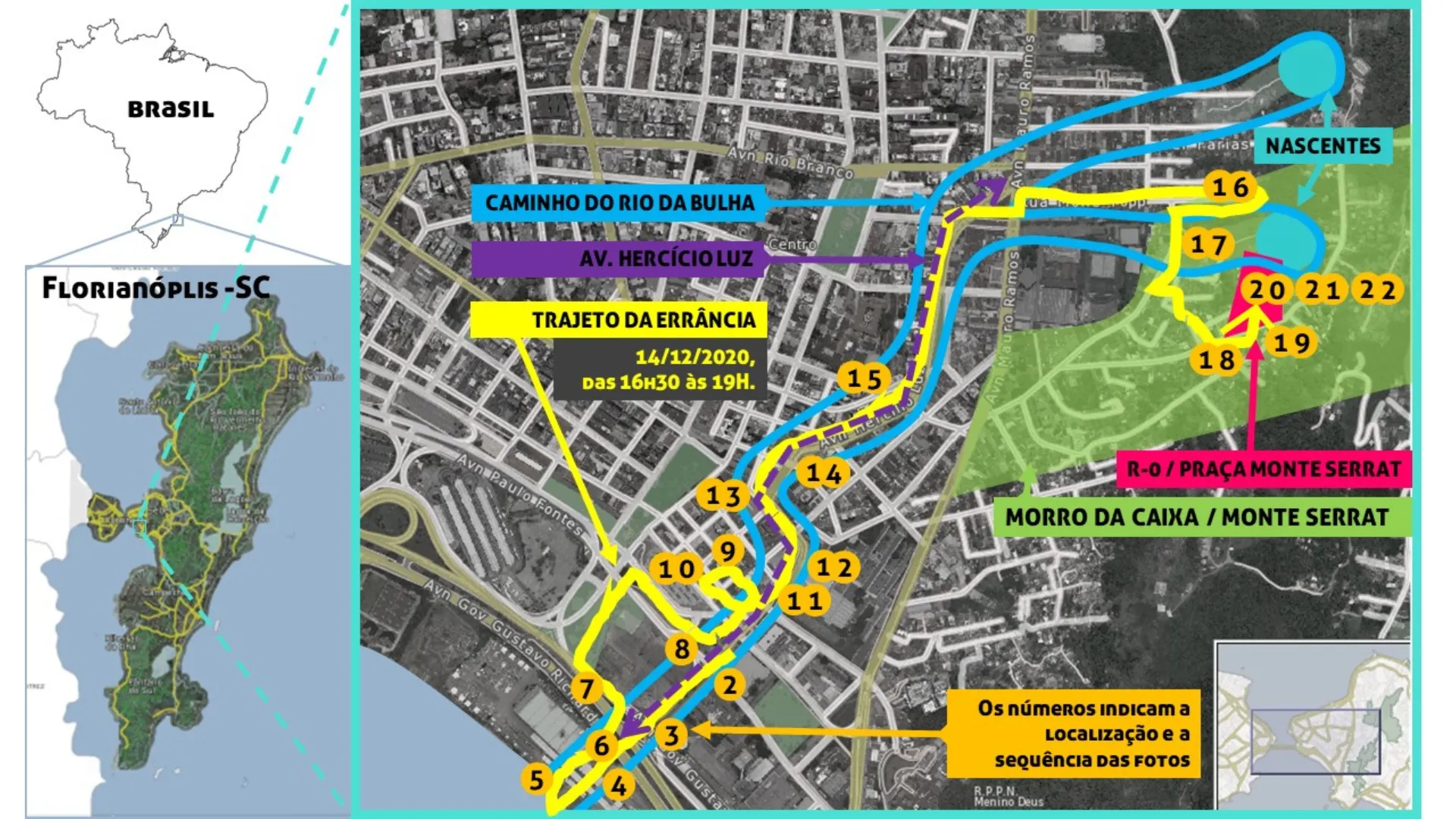
Map: Rafael Alves Campos
Tuca Malungo: the tiger of the Rio da Bulha
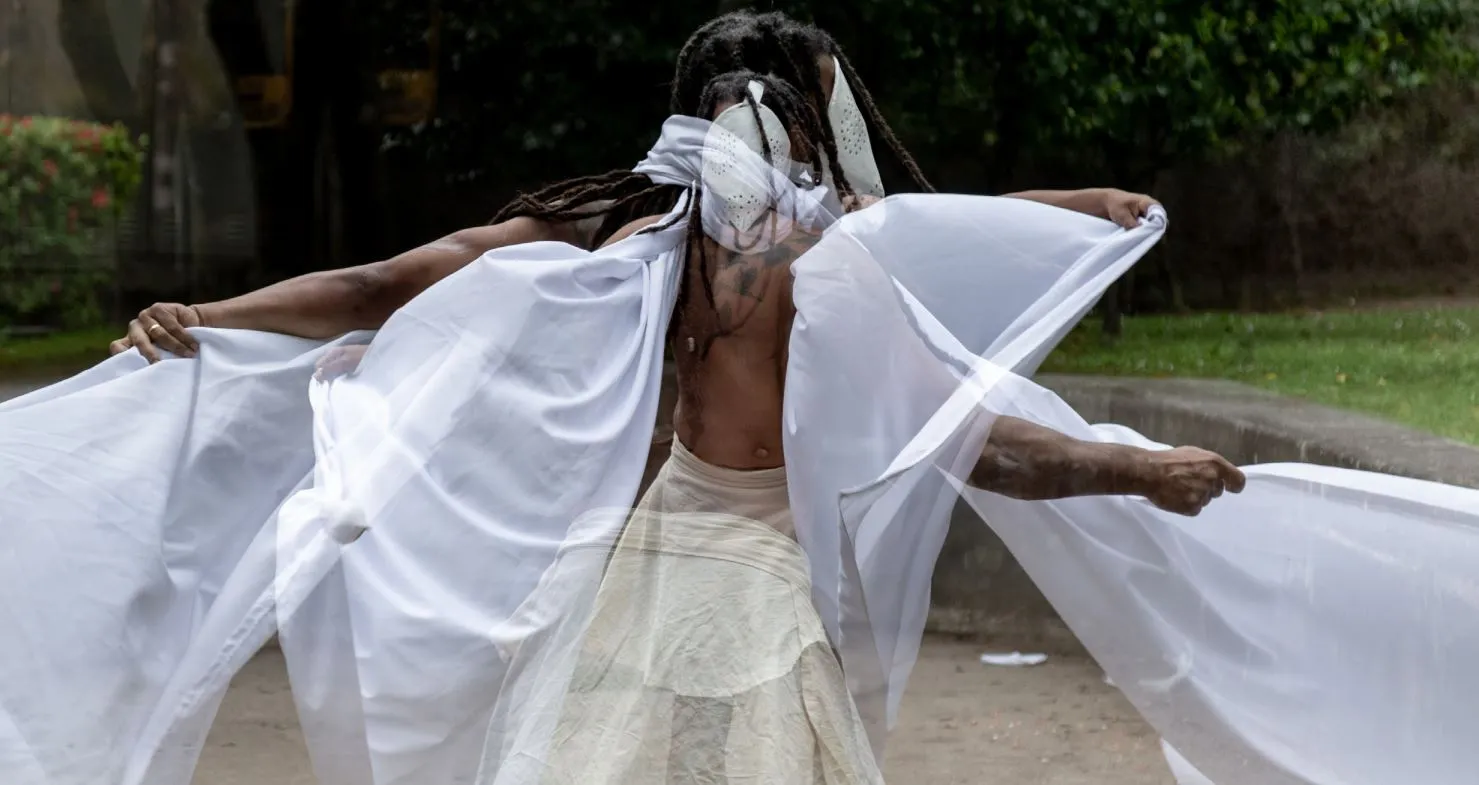
Photo: Thiago Liberdade e Cristina Alves
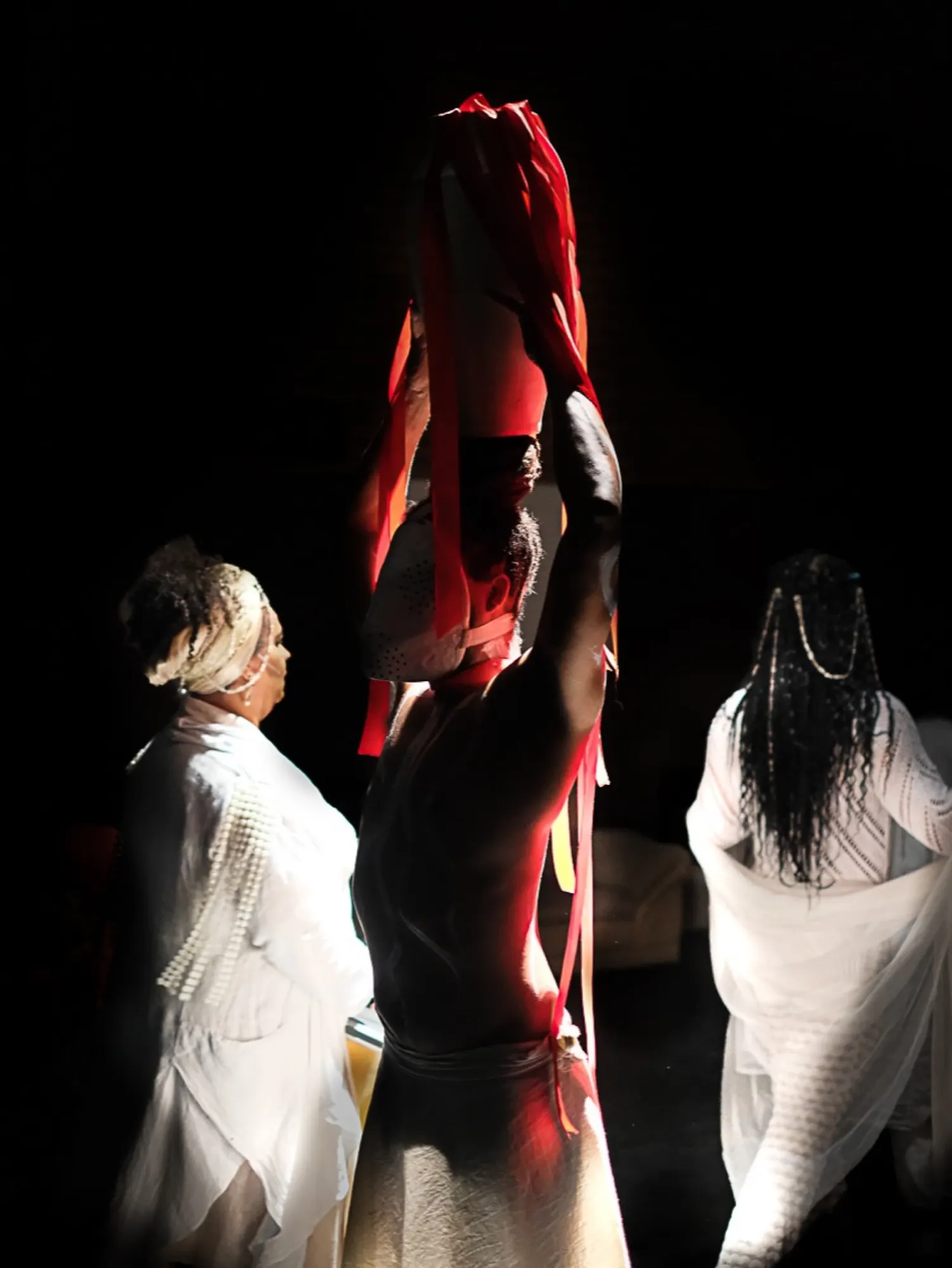
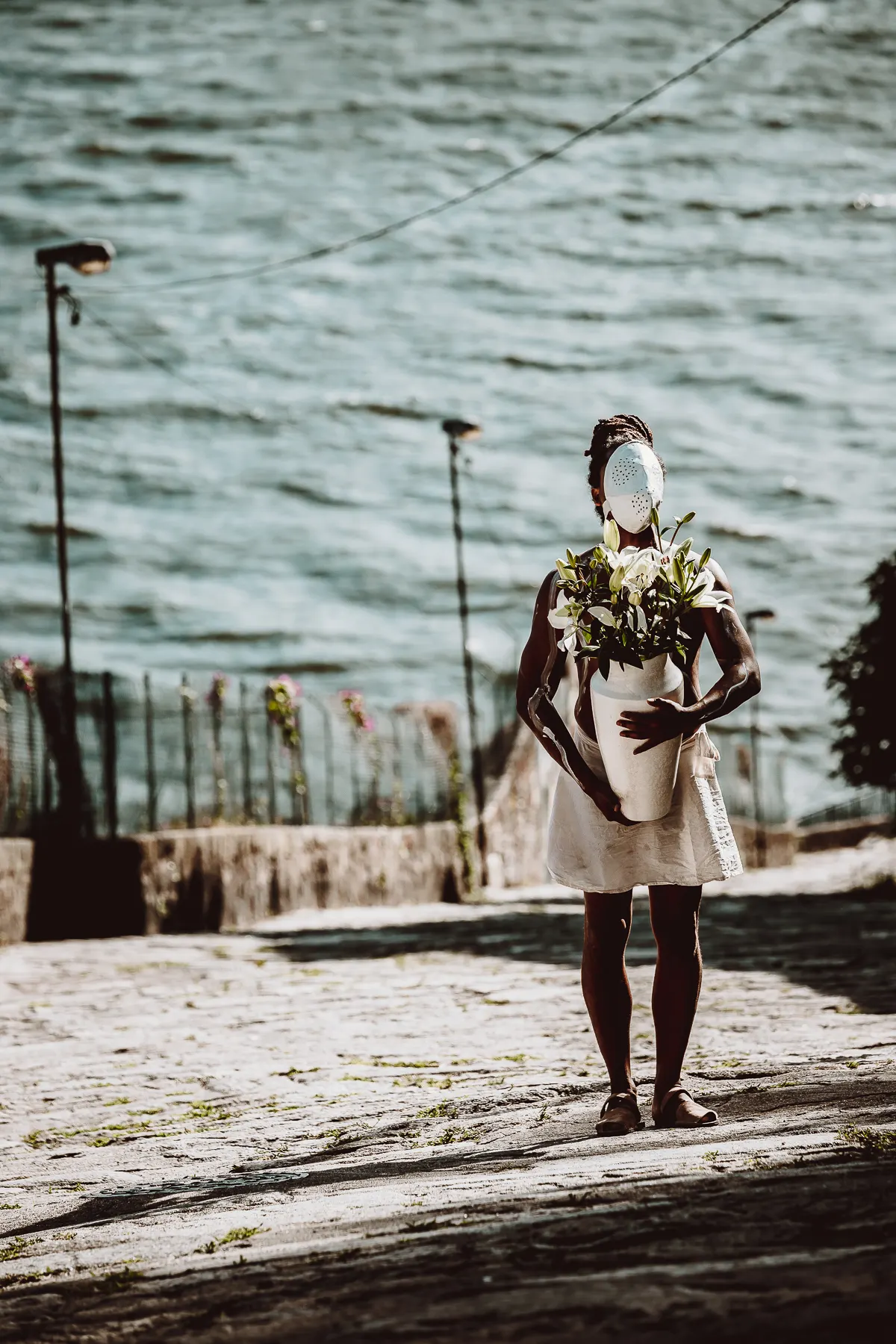
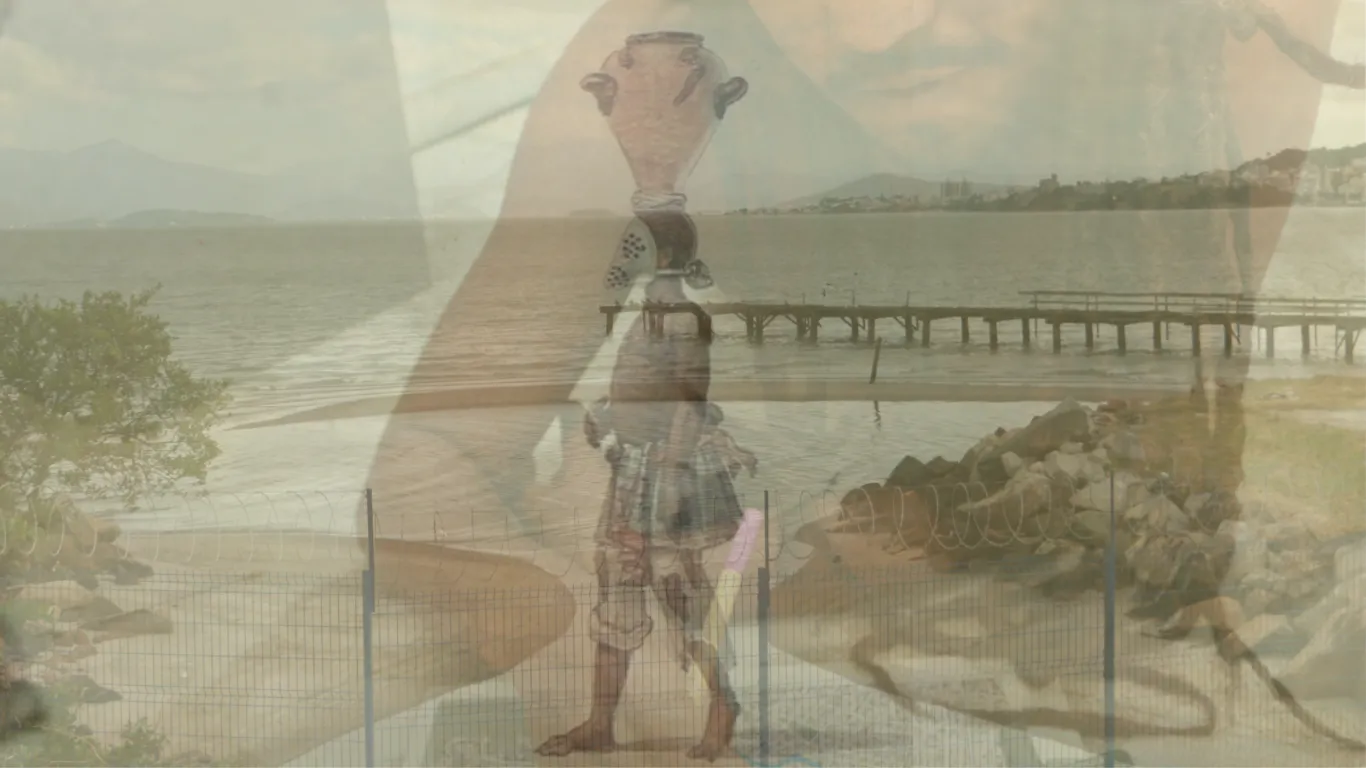
The Appearances of Tuca Malungo (an ancestral presence evoked from a colonial archive) are visual narratives that seek the disalienation of the ancestral tiger Tuca Malungo and of places marked by colonial trauma.
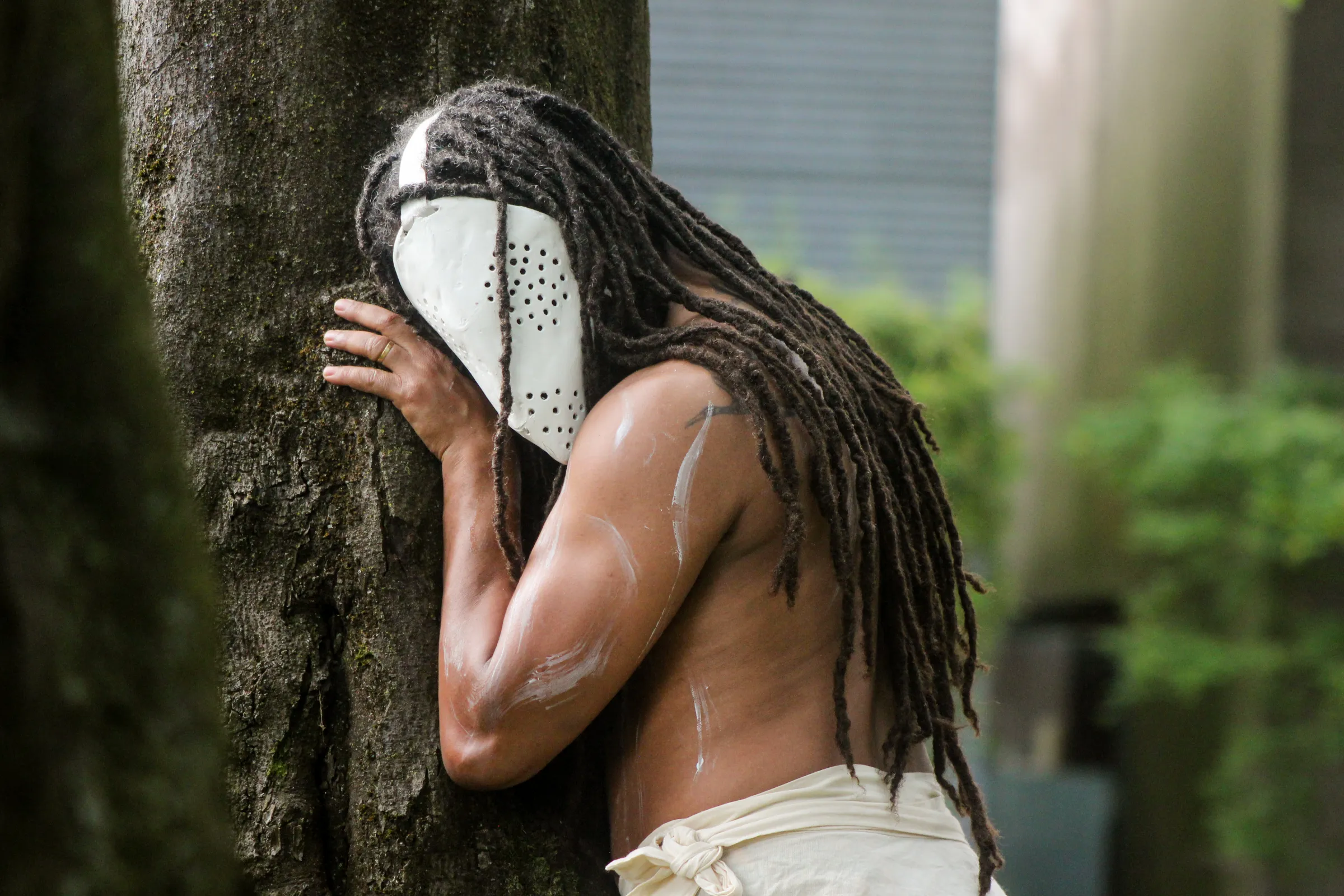
Photo: Thiago Liberdade e Cristina Alves
Rafael and Tuca connected through the colonial trauma that marked both their bodies, in the same place, centuries apart. Tuca Malungo is a genderless entity, evoked from a colonial archive by Debret. The tiger captured in the watercolour of the tin-plate mask (máscara de flandres) is also a river, rising on the Morro da Caixa, on the island of Santa Catarina, in Florianópolis, Brazil.
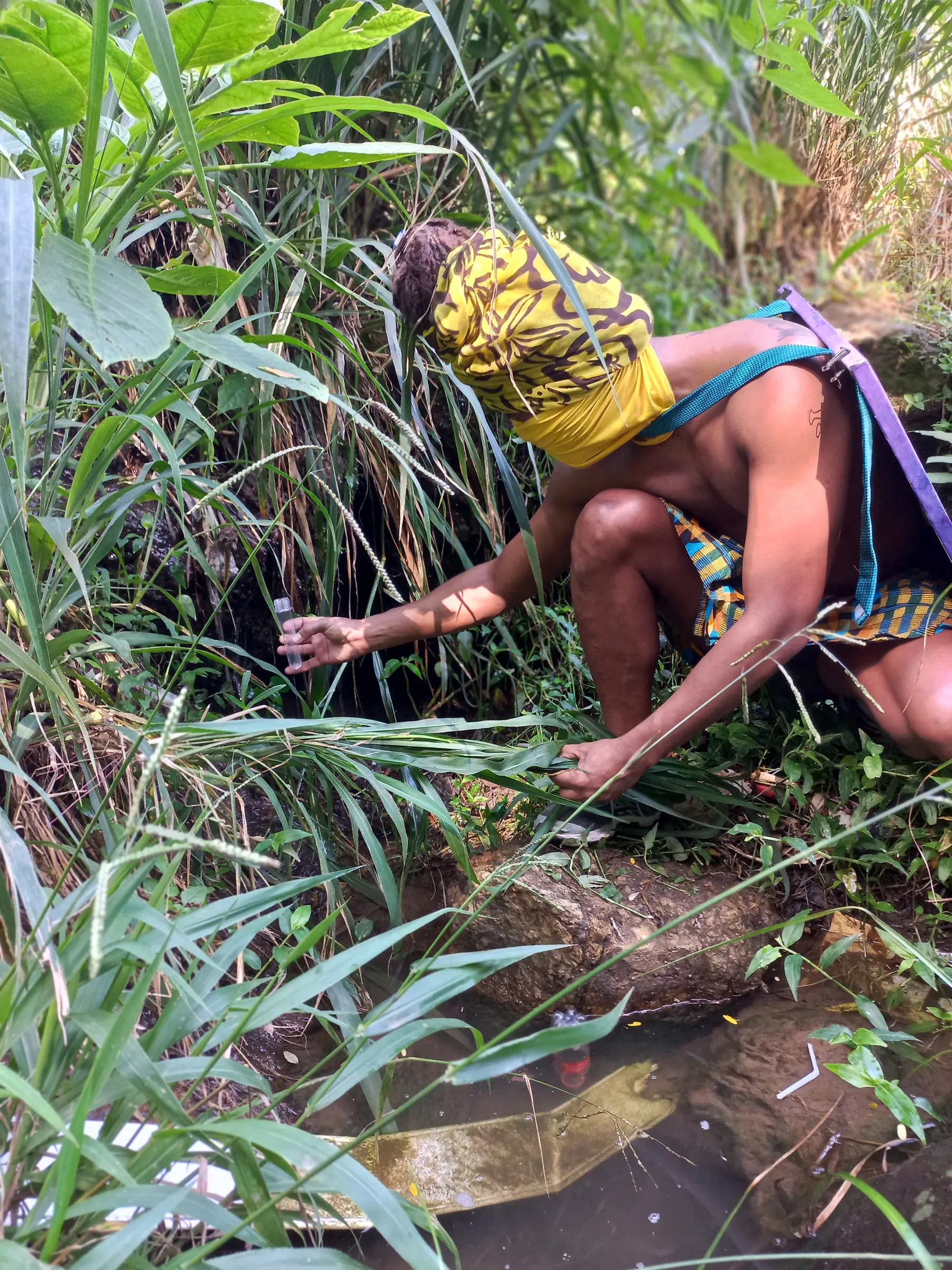
Photo: Priscila dos Anjos e William Thomsen
The Rio da Bulha takes its name from the constant dumping of sewage and is tied to the labour of enslaved people who carried the bulhas: vessels of excrement and wastewater. The acid overflow burned their skin, leaving striped scars that earned them the nickname “tigers”. The colonial trauma that marked the tiger’s body also marked Rafael’s, when he experienced police violence above that same river. This transgenerational trauma revealed something deeper: water running underground, its very existence erased by environmental destruction and by real-estate speculation, both linked to tactics of de-Africanising Brazilian cities.
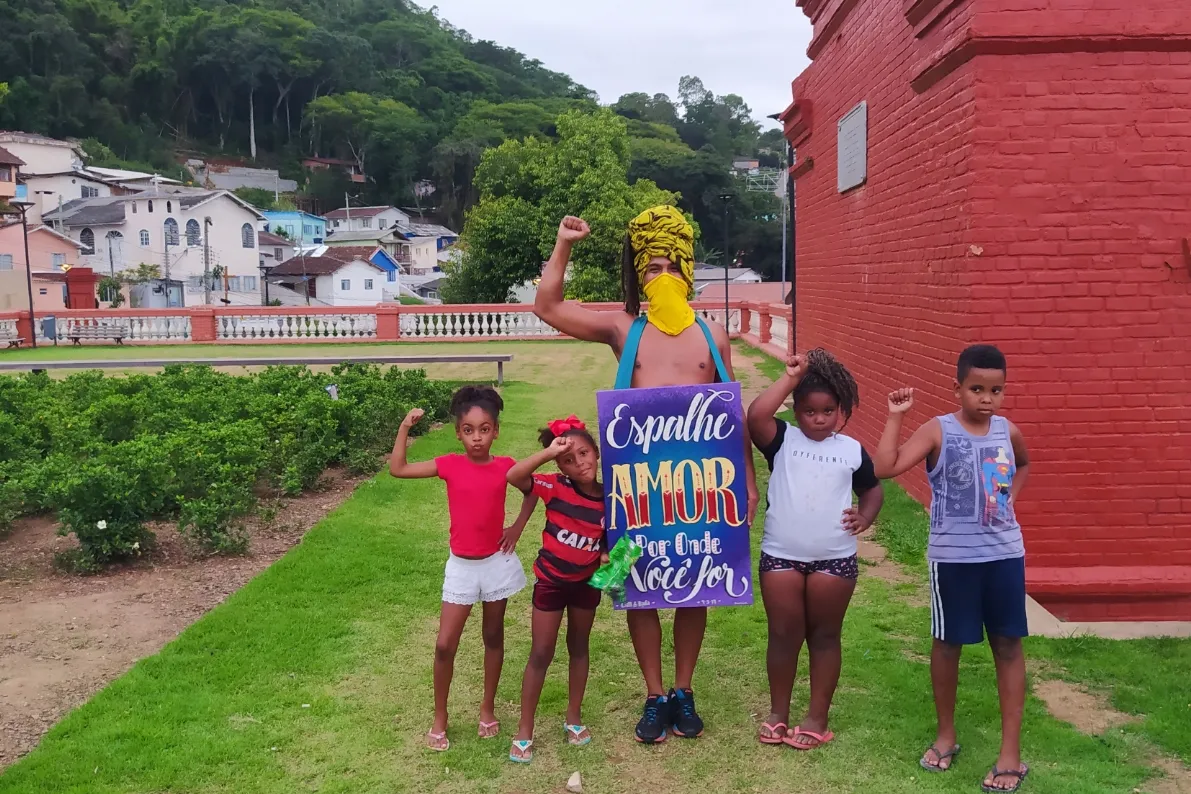
Photo: William Thomsen
Body, archive, city, racism, environment, colonialities and memory are interconnected layers that emerge in the appearances of this ancestral presence. Tuca manifests in Rafael’s body and walks over invisible waters around the world, creating bodygraphies that evoke the encounter between embodied memory and urban space. Together, Tuca and Rafael cross spiral time, confront the present as a strategy of struggle and create Afrofutures, seeking to overcome pain and to disalienate the body-territory.